

Skin Expander Removal for Facial Reconstruction Surgery
© Andrew Hammerand
Mayo Clinic
Phoenix, Arizona, United States
Andrew's image, "Skin Expander Removal for Facial Reconstruction Surgery" won the BioImages 2025 Best of Show.
What was your concept when creating this image? Was it for a job or for personal creativity?
These photographs were taken as part of a larger series during an ENT facial plastics surgical case for Dr. Brittany Howard at the Mayo Clinic in Phoenix, Arizona. For longer complex surgeries such as this one, I attempt to make more standardized views to help achieve and maintain consistency. This series of AP (Anterior-Posterior) views serves as part of the larger case documentation. The photographs help document baseline anatomy, any step-by-step modifications made and clearly show the final outcome of the surgery.
Tell us something about the creative process you use when coming up with a solution to a problem/assignment. What technical issues did you have, or have to workout, to create this image?
While photographing in an operating room, it's common to receive direction from the surgeon while simultaneously working out the technical requirements needed to achieve proper photographic documentation. For instance, with this case, Dr. Howard required a variety of standard views including anterior and lateral face, surgical close-ups, etc., to document the changes during the surgery. Given the placement of the left cheek skin expander, I decided to create consistent directional lighting to emphasize the left face during the entire case with an off-camera, handheld flash. Utilizing this technique with consistent framing, subject distance, and lighting position additionally helped me reduce specular glare from the surgical site, which may often present a challenge. All of this is done while navigating a complex, dynamic surgical setting that allows only a minimal margin for error.
Tell us something about the subject of this image.
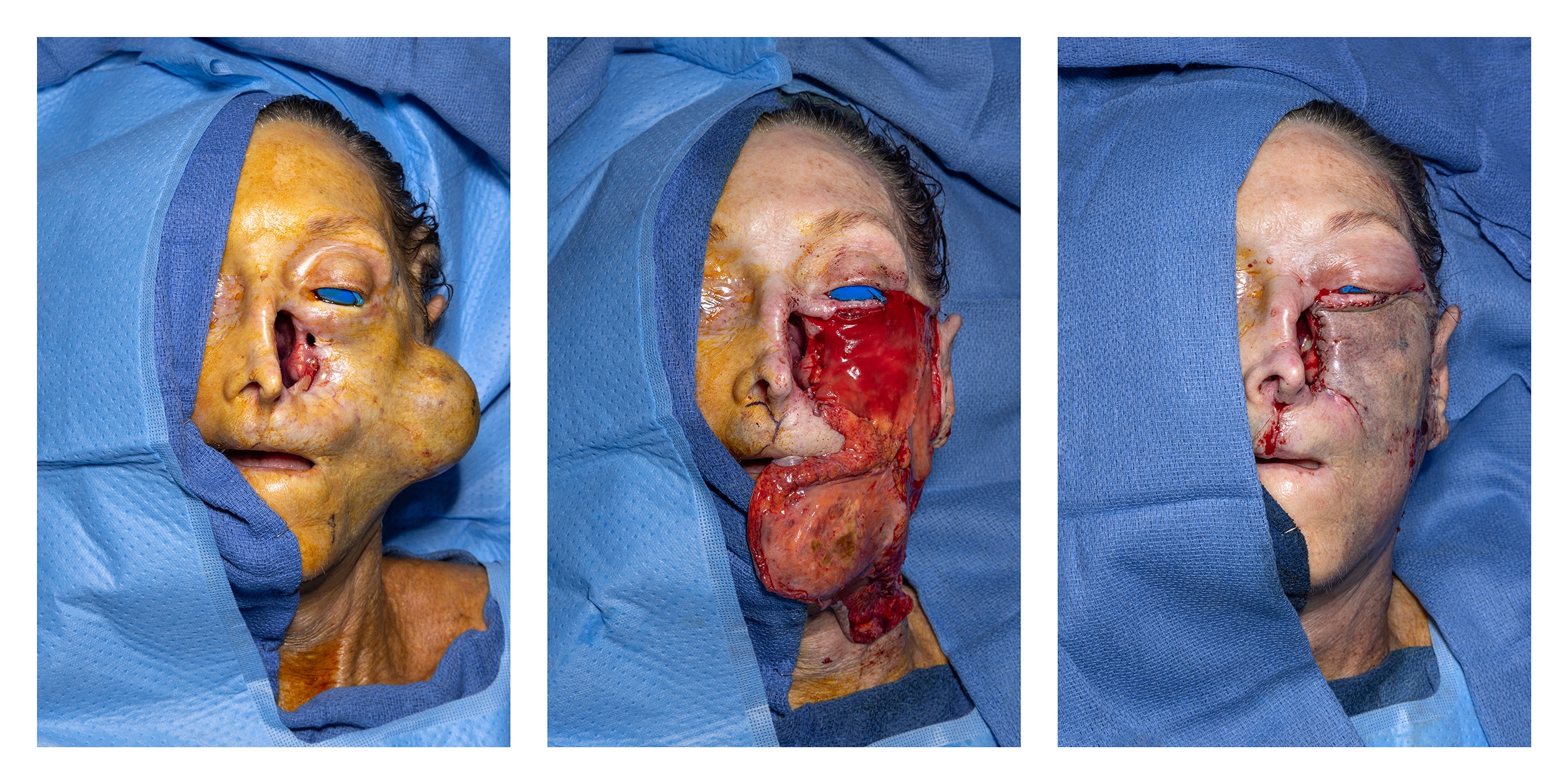
These photographs were documentation as part of a first step surgery to help rebuild this patient's nose in the future. The patient has a history of recurrent nasal skin cancer, with prior resection and radiation. Here they are at the beginning of their facial reconstruction process. The first photograph shows the patient at their post-cancer treatment baseline with an expander in the left cheek to stretch and create fresh skin. In the second photograph, their expander has been removed, and the facial tissue is freed up for transfer. The third photograph shows the tissue transferred to reconstruct the left cheek, close fistulas, and support their left lower eyelid. It is important to mention that consent for intraoperative photography was provided by this patient as part of their surgical consent. Intraoperative photography is important because it allows us to provide surgeons photographs that can be used for documentation, education, and research. Considering the sensitive and identifying nature of these specific photographs, consent was additionally confirmed with the patient prior to publication.
Tell us something about you. What is your imaging background?
I hold a bachelor's degree in fine art photography from Arizona State University and a master's degree in fine art photography from the Massachusetts College of Art and Design in Boston. I have taught classes and workshops covering art, photography, and graphic design to students throughout the United States and have worked professionally across the field of graphic arts including traditional photographic darkrooms, screen printing, graphic design, and publishing. I have had my photographic artwork published and exhibited internationally, recently being included in the book, "Collaboration: A Potential History of Photography" in 2024.
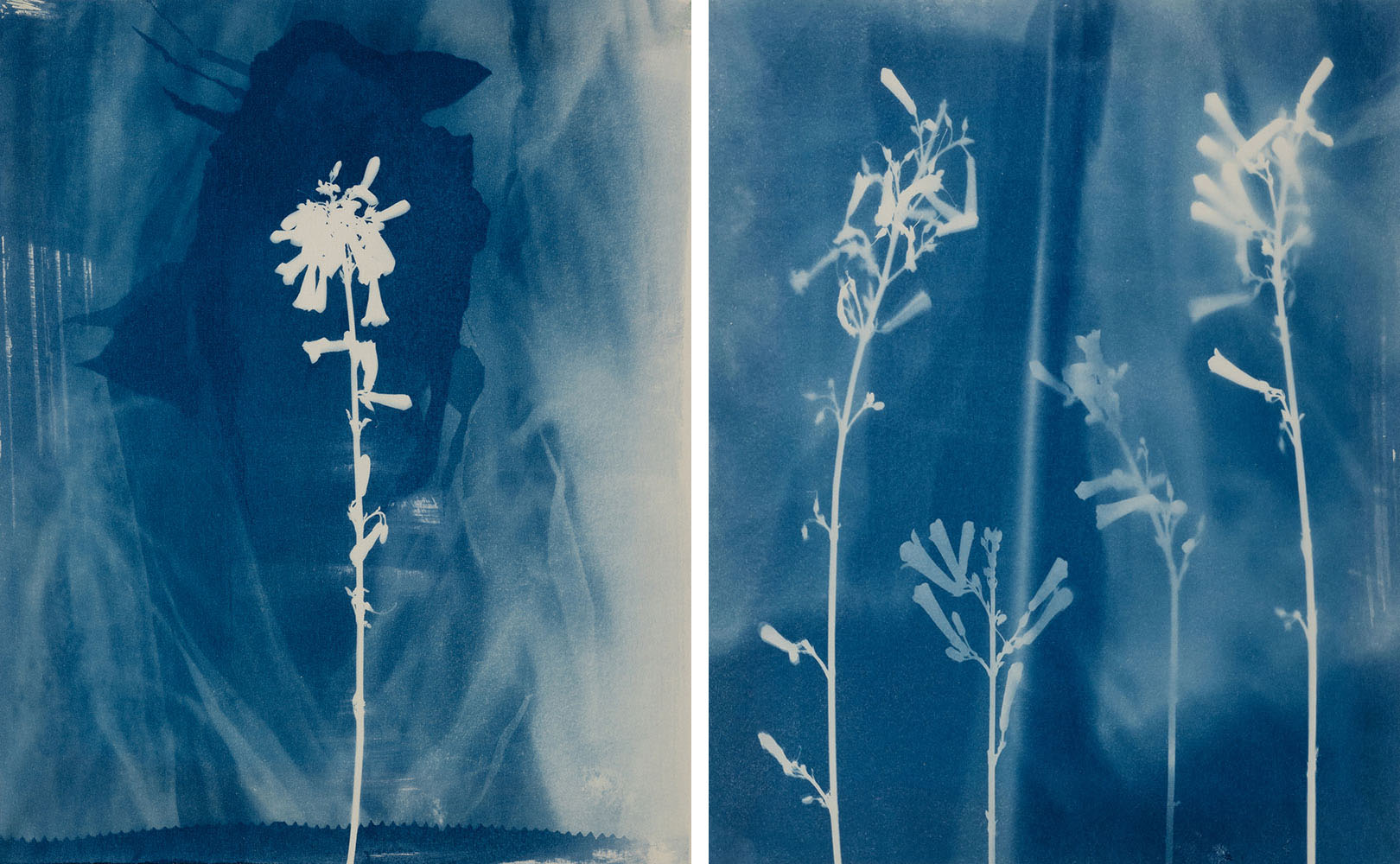
This past year, as a personal project, I have been making cyanotype prints. The cyanotype process is a historical and accessible way to engage with photography that most people can do at home with no need for extensive darkroom setups or expensive camera equipment.
Who are some of your favourite image makers? What images or image makers inspire or influence you?
There are many image makers and artists that influence me, but the one I've been most inspired by recently is my friend Fabiola Menchelli. Her work is often rooted in photographic techniques but is defiant and beautiful in a way that is difficult to describe here. I highly suggest you see her artwork in person if you ever have an opportunity to see it exhibited.
Do you have any advice for people interested in an imaging career in biomedical/life sciences.
I arrived at my position in a way that is more tangential than most of my colleagues, so I still view myself as a student in this field. However, I would encourage anyone interested in biomedical imaging to be open to continuous learning and understand that this discipline sits in a unique intersection of art, science, and documentary photography. Take advantage of all the resources BCA has to offer and see where your curiosity leads you.
Are you a member of BCA and if so how has your membership in the BCA helped you?
I am proudly a member of BCA. Having access to the BCA has helped me identify standards for biomedical imaging, encouraged me to strive for higher quality images, and connected me with other like-minded folks. The work we make as clinical and surgical photographers is niche and often inaccessible to the public. Receiving support, feedback, and recognition from the BCA community has helped validate the efforts and skill required to make successful medical photographs.